
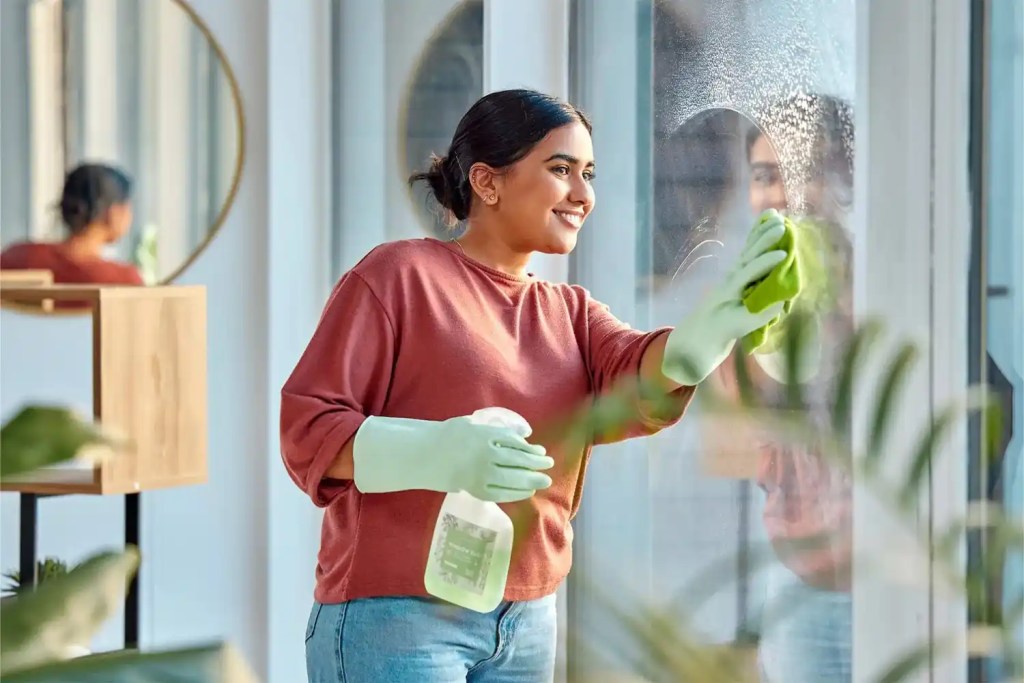
According to the Association des professionnels de la construction et de l’habitation du Québec (APCHQ), residential renovations generate on average 2 to 5 times more dust than a normal environment, with fine particles that can remain suspended in the air for weeks. Therefore, post-renovation cleaning is much more than just a quick sweep — it’s an essential operation to restore a healthy environment. Here’s how to proceed methodically.
Why Post-Renovation Cleaning is Unique
Construction dust is radically different from ordinary household dust. Depending on the type of work, it can contain plaster, silica, wood fibers, paint particles, and even asbestos in older buildings. These particles are finer, more abrasive, and potentially more harmful to health than everyday dust.
A standard household vacuum cleaner only captures a fraction of this fine dust — the rest is simply redistributed into the air. This is why professional cleaning with appropriate equipment (industrial vacuums with HEPA filters) is highly recommended after major work.
Phase 1: Rough Cleaning (Day 1)
Before any fine cleaning, visible debris and the thick layer of dust must be removed. Start by removing all protective materials (tarps, tape, plastic films). Collect construction debris with a sturdy broom and heavy-duty garbage bags. Do an initial pass with an industrial vacuum on all surfaces — floors, walls, ceilings, window sills.
Don’t forget the ventilation ducts: if your work involved drywall or floor sanding, dust has likely infiltrated your ducts. A furnace filter change is essential at this stage.
Phase 2: Intermediate Cleaning (Days 2-3)
Once the rough layer is removed, move on to wet cleaning. Wash all walls and ceilings with a damp cloth or flat mop. Clean windows, door frames, and baseboards. Wash interior and exterior cabinets. Clean light fixtures and ceiling fans.
At this stage, use damp microfiber cloths instead of feather dusters or dry cloths, which stir dust into the air. Rinse your cloths very frequently — they quickly become saturated with construction dust.
Phase 3: Fine Cleaning (Days 3-4)
This is the finishing stage. Vacuum all surfaces again with a fine nozzle. Mop the floors thoroughly (several passes will be necessary). Clean appliances, the inside of drawers and cupboards. Polish faucets and metal surfaces. Clean windows one last time.
For homes in Rosemère, Blainville, or Saint-Eustache, our professional housekeepers have the necessary equipment for this delicate phase.
Table: Cleaning by Type of Renovation
| Type of Renovation | Dust Level | Estimated Cleaning Time | Required Passes |
|---|---|---|---|
| Painting Only | Light | 3-5 hours | 1-2 |
| Floor Replacement | Moderate to High | 5-8 hours | 2-3 |
| Bathroom Renovation | High | 6-10 hours | 2-3 |
| Kitchen Renovation | High | 8-12 hours | 3-4 |
| Drywall Sanding | Very High | 10-15 hours | 3-5 |
| Full Renovation | Extreme | 15-25+ hours | 4-6 |
Mistakes to Avoid
Starting too early: Wait until paint, varnish, and joints are completely dry before cleaning. Cleaning prematurely can damage fresh finishes and stir up still-damp particles.
Using a household vacuum: Residential vacuums without HEPA filters redistribute fine dust into the air. Rent or use an industrial vacuum for at least the first two phases.
Forgetting the ducts: Construction dust in ventilation ducts will be redistributed throughout your home every time the heating or air conditioning runs. Duct cleaning is recommended after major work.
Neglecting textiles: Even if protected, curtains, cushions, and carpets will have absorbed dust. Wash or have all textiles in the house cleaned after renovations.
When to Call a Professional
Post-renovation cleaning is one of the most requested services at Ménage Laurentides. Our team has the appropriate professional equipment — HEPA vacuums, steam cleaners, specialized products — and the experience necessary to effectively manage all types of construction dust.
If your renovation was major (full kitchen, bathroom, sanding), professional cleaning is not a luxury — it’s practically a necessity. The amount of fine dust is such that amateur cleaning risks taking 3 to 4 times longer without achieving the same result. We operate throughout the Laurentides: Laval, Montreal, and all served cities.
FAQ — Frequently Asked Questions about Post-Renovation Cleaning
How long after the work can you clean?
Wait at least 24 hours after the work is completed to allow dust to settle and finishes to dry. For fresh paint, wait for the full drying time indicated by the manufacturer before washing adjacent walls.
How much does post-renovation cleaning cost?
Rates vary from $200 for a room with light work to $800+ for a complete house renovation. The price depends on the area, the type of work, and the dust condition. Request a free quote for an exact price.
How many cleaning passes are necessary?
For drywall sanding or a major renovation, plan for 3 to 5 complete passes spread over several days. Fine dust continues to settle for 2-3 days after the initial cleaning, requiring additional passes.
Can one live in the dwelling during post-renovation cleaning?
It is not recommended during phases 1 and 2 due to the amount of dust stirred up. If you must stay, wear an N95 mask and keep windows open for ventilation. Asthmatic or allergic individuals should avoid the dwelling until the end of phase 3.
Is post-renovation cleaning covered by the renovation budget?
Some contractors include basic cleaning in their contract, but it is rarely as comprehensive as dedicated professional cleaning. Plan a separate budget of 3-5% of the total renovation cost for post-work cleaning. It’s an investment in your health and comfort.
Is move-out cleaning similar to post-renovation cleaning?
No. Move-out cleaning deals with normal household dirt — dust, kitchen grease, limescale. Post-renovation cleaning is much more intensive and requires specialized equipment due to the nature of construction particles. The two services are distinct and adapted to different situations.
Renovation completed? Contact Ménage Laurentides at 450-489-8995 to restore an immaculate interior.

